Roof Safety System
Aluminum Edge Guard Rail
Railing systems or side protection systems are special railings that prevent falling onto roof surfaces. They are easy to transport and can protect several people from falling.
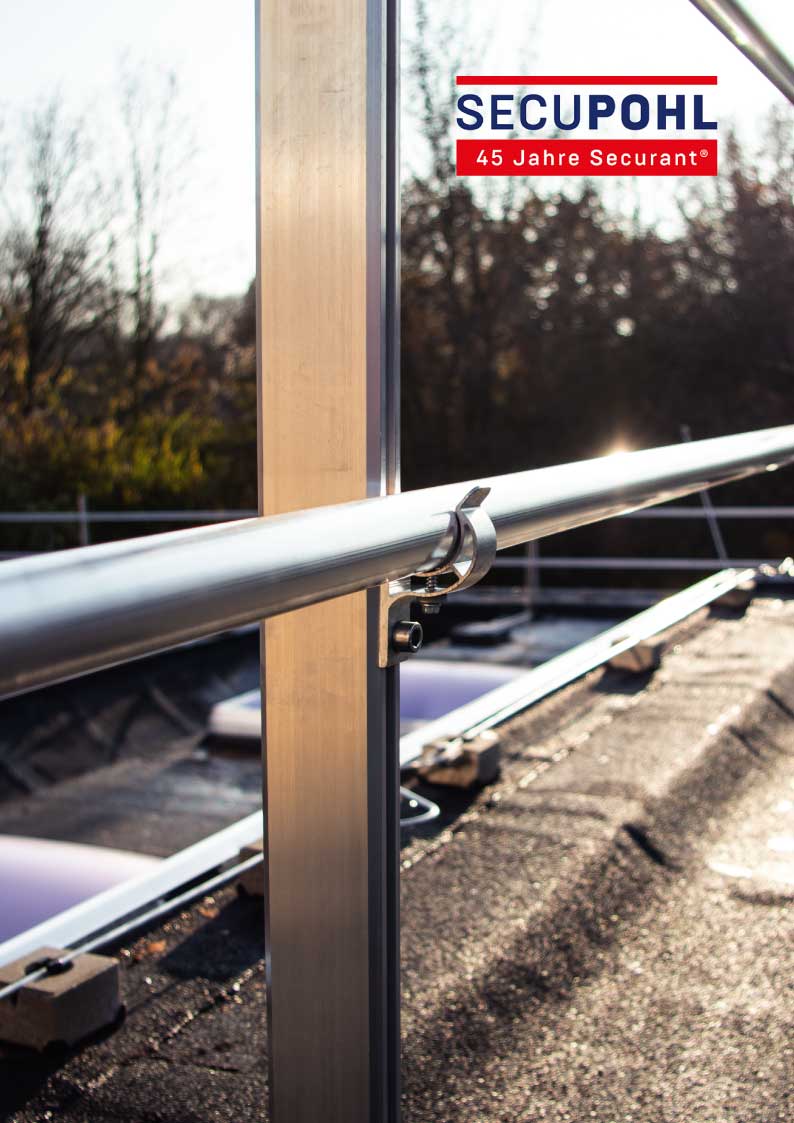
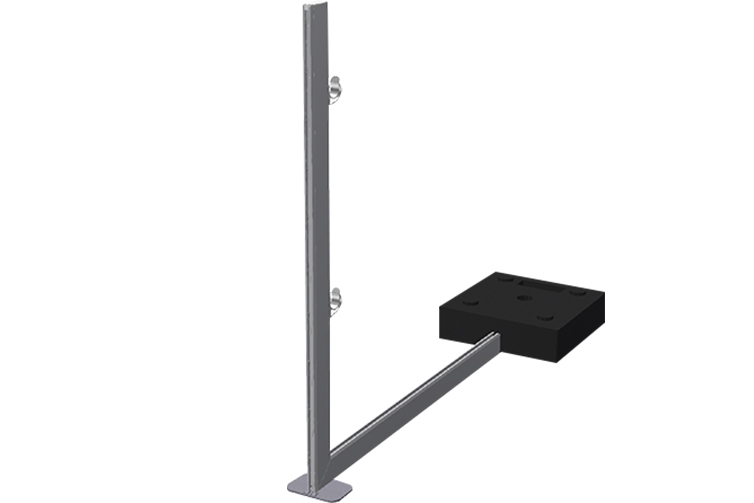
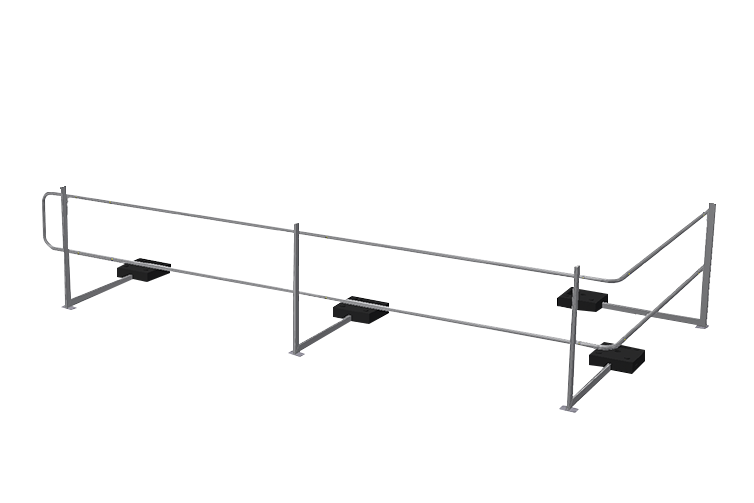
Functional, reliable and durable – that is SECU Rail 2.0, the collective safety railing made of aluminum for flat roofs. It is compatible with all roof structures, with and without parapets, and can be perfectly integrated into the appearance of the building.
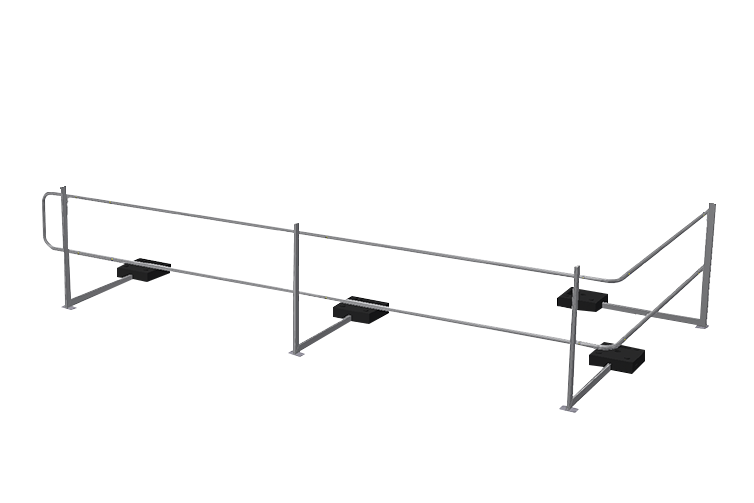
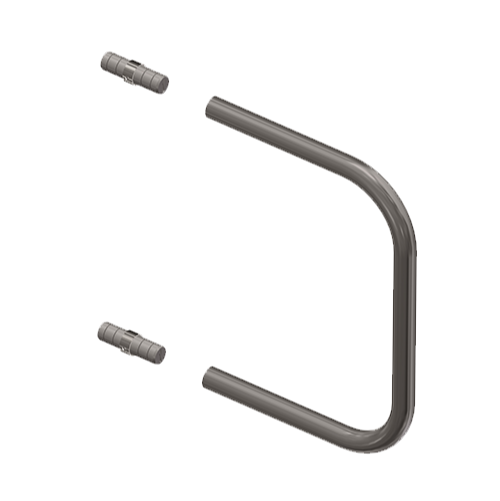
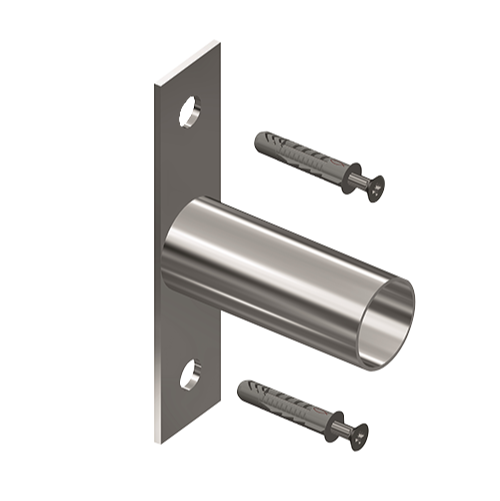
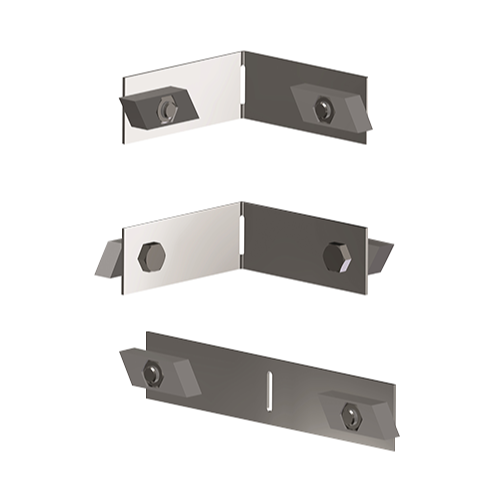
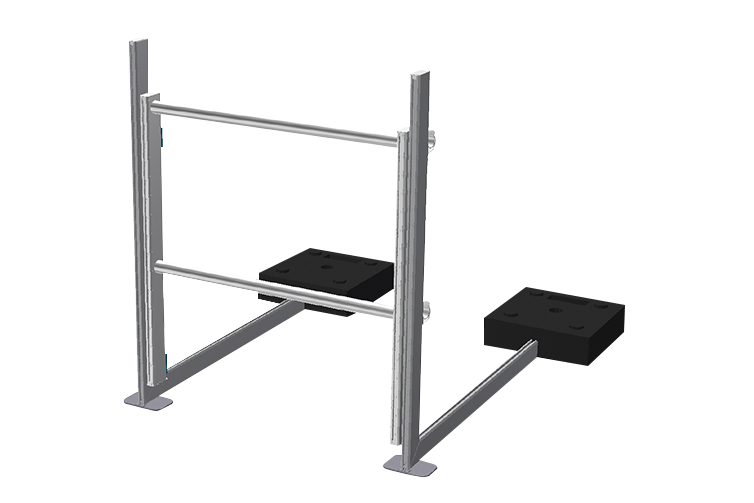
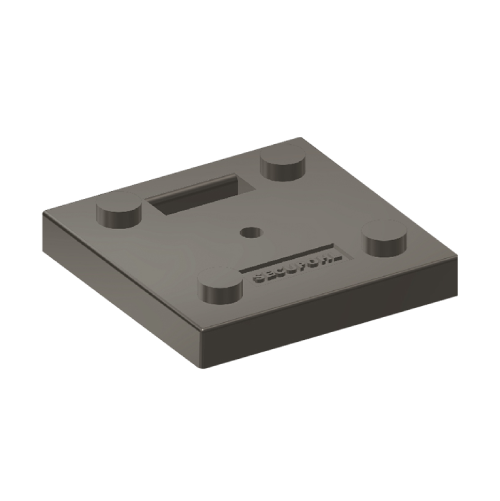
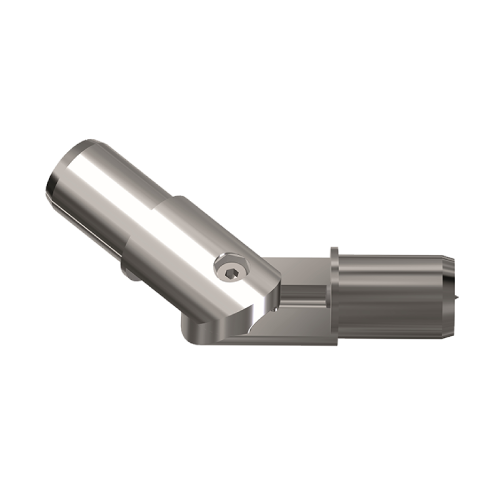
The self-supporting construction with weights on each post makes drilling into the roofing superfluous. The smart clip & fix system with only a few individual parts allows easy and effortless assembly. Accessories such as variable corner connectors, end brackets, wall ends or self-closing doors also increase the flexibility of the SECU Rail 2.0.
Collective fall protection system for use on flat roofs with a slope of max. 10°. Temporary self-supporting side protection according to EN 13374-A: 2019, as well as railing system according to EN ISO 14122-3: 2016 The height of the handrail, max. 1160mm and the knee rail is infinitely variable.
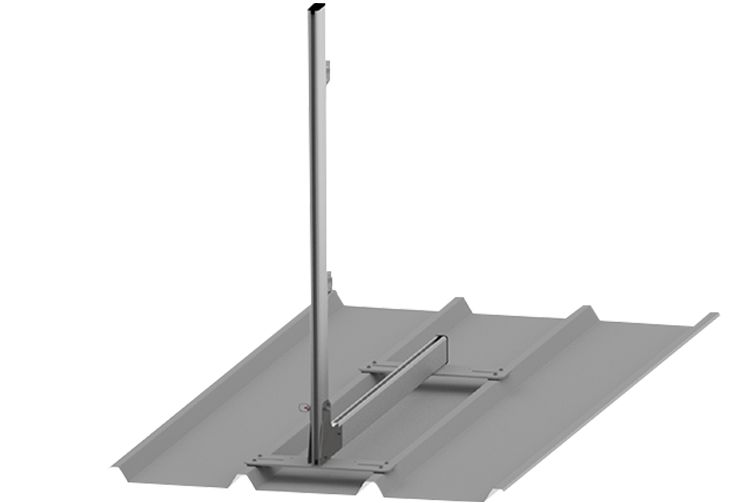
Collective fall protection system for attachment to sheet metal roofs with a slope of max. 10°. Side protection in accordance with EN 13374-A: 2019, as well as railing system in accordance with EN ISO 14122-3: 2016 The height of the handrail, max. 1160mm and the knee rail is infinitely variable.
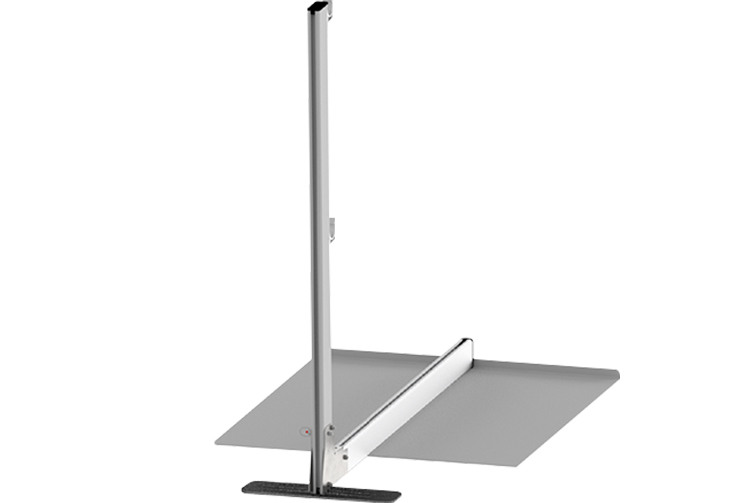
Collective fall protection system for use on green roofs for integration into the green roof with a slope of max. 5°. Temporary self-supporting side protection according to EN 13374-A: 2013, as well as railing system according to EN ISO 14122-3: 2016. The height of the handrail, max. 1160mm, and the knee rail can be adjusted continuously.
Collective fall protection system for use on flat roofs with a slope of max. 10°. Temporary self-supporting side protection according to EN 13374-A: 2019, as well as railing system according to EN ISO 14122-3: 2016 The height of the handrail, max. 1160mm and the knee rail is infinitely variable.
Collective fall protection system for attachment to sheet metal roofs with a slope of max. 10°. Side protection in accordance with EN 13374-A: 2019, as well as railing system in accordance with EN ISO 14122-3: 2016 The height of the handrail, max. 1160mm and the knee rail is infinitely variable.
Collective fall protection system for use on green roofs for integration into the green roof with a slope of max. 5°. Temporary self-supporting side protection according to EN 13374-A: 2013, as well as railing system according to EN ISO 14122-3: 2016. The height of the handrail, max. 1160mm, and the knee rail can be adjusted continuously.
Everyone can imagine something under the term railing. Guard rails / roof railings are the special railings that are attached, for example, on roofs or in other dangerous areas. These should limit the dangers in these locations and keep the risk of injuries and accidents as low as possible.
Especially when it comes to fall protection at heights, protective railings / roof railings have the task of providing protection against falls. The protective railings / roof railings are devices that are intended to have a preventive effect. When it comes to fall protection, a distinction is made between primary and secondary fall protection. The guardrails / roof railings fall under the primary fall protection and are intended to provide collective protection and work preventively.
Guard rails / roof railings are known as protective devices and are intended to ensure that, for example on roofs, the edge of the fall cannot be reached in the first place. Such protection can be particularly effective on roofs and flat roofs, because accidents can only be avoided if there is an additional obstacle between the person and the edge of the fall. Since the guardrails are part of the collective protective measures, they are designed to protect several people from falling, they differ from personal fall protection. In contrast to personal fall arrest systems, which can only protect individual people, whole groups of people are protected in this way.
The guardrails are also used in other areas to protect several people. There are different types of guardrail / roof railing, which differ mainly in the way they are installed and can therefore offer the right protection for every use.
The various protective railings / roof railings can be as different as the conditions on site. Because the type of roof, the material and also the surrounding conditions and the place of use play an important role in the choice of the right protective railing / roof railing. In this way, the protective devices can be adapted to the circumstances and the best level of safety can always be guaranteed.
Basically, the guardrails / roof railings are constructed in a similar way, the distinction is made by the type of assembly. The following protective railings / roof railings differ:
Parapet railings are so named because they are connected to the parapet of the roof. This is a side protection that is available in different heights and inclinations. All roofs, ie flat roofs that are equipped with an attic, can be secured with such a guardrail / roof railing. The parapet railings also offer a wide variety of fastening options. This type of guardrail / roof railing can be individually adapted to many roofs. Depending on the installation and height or inclination, very different variants of this type of railing can be installed.
The different mounting options are as follows:
This type of guardrail / roof rail is a mobile version. Since these railings are held by a weight, they can easily be dismantled again without leaving any traces.
Either the railings can be held in position with additional weights or, in the case of a green roof, they can be supported and held in position by the vegetation. In this way, this type of railing can be optimally adapted to the individual requirements. In addition, there are also many different variants of the railings themselves. This makes it easy to adapt to many roofs and requirements.
Especially on roofs that have escape or escape routes, these must also be secured separately, because hectic and panic can quickly arise here. This is exactly what happens quickly on helipads on hospitals or on escape routes. With special guardrails, which are set up in the form of catwalks, a high level of safety can also be ensured here. In this way, people are protected and guided at the same time in sensitive situations. Despite panic and hectic, people can be brought to safety quickly and a fall can be prevented.
Many roofs are equipped with a metal roof. Special guard rails / roof railings can also be installed here. These are screwed directly to the roof and can thus provide the necessary fall protection. This type of protective device is particularly popular with sandwich roofs or trapezoidal roofs.
It is important to carefully study the various regulations before installing a guardrail / roof railing. Because only if these requirements are met, the insurance can also step in in the event of an accident. Since not every roof can be equipped with standard protective devices, it is always advisable to consult experts who are very knowledgeable. The various protective railings / roof railings can be combined in many areas and, above all, all roofs can be optimally secured with a personal protective device. The different types of guardrails can also be easily combined, so everyone can find the right guardrail for the respective location.
General regulations for guard rails / roof railings:
It is also important to know that the technical regulations for operational safety, under TRBS 2121, stipulate that collective protective measures, including protective railings / roof railings, must always be preferred to individual protective measures.
Personality and customer proximity come first. We are looking forward to your contact.